





 China
China Georgia
 Spain
Spain











Morocco in Winter 2026: Warm Cities, Desert Tours and Smart eSIM Tips
If you’re dreaming of sunshine while the rest of Europe shivers, Morocco in winter 2026 is one of the smartest bets you can make. You get blue skies, warm afternoons, fewer crowds, and prices that are often 20–40% lower than peak season. The only thing that can really derail the magic is stress over logistics and staying connected – landing in Casablanca or Marrakech, trying to message your riad owner, and realizing your roaming doesn’t work is a brutal way to start a trip. That’s exactly where planning your connectivity – especially with a Morocco travel eSIM setup – turns from “nice to have” into “trip saver.”
In this guide, I’ll walk you through what Morocco actually feels like in winter 2026: the warmest cities, what to expect on desert tours, how to pack for big day–night temperature swings, and the details of mobile data that most blogs skip. I’ll share what’s realistically open, what’s quieter, and what gets chilly enough that you’ll want more than a light jacket. I’ll also break down how to stay online for maps, WhatsApp, and remote work without gambling on airport SIM stalls or your home provider’s roaming. By the end, you’ll know exactly where to go, what to expect, and how to stay connected the whole time.
Is Morocco Warm in Winter 2026? What the Weather Really Feels Like
Let’s clear up the biggest question first: Is Morocco warm in winter 2026? The honest answer is: it depends where you go and what time of day it is. Morocco is roughly the size of France and Spain combined, with Atlantic coast, Mediterranean coast, mountains, and desert. That means January in Tangier feels nothing like January in Agadir or Merzouga. In my experience, the biggest surprise for first-time winter visitors is how much temperatures swing between noon and midnight, especially inland.
On the Atlantic coast – cities like Agadir and Essaouira – daytime highs in December and January usually sit between 18–22°C (64–72°F). On a calm, sunny day, you can absolutely sit at a café in a T-shirt at lunchtime. By 6–7 p.m., though, temperatures often drop to 10–12°C (50–54°F), and the ocean breeze can make it feel cooler. Inland cities like Marrakech and Fez often see sunny winter days around 17–20°C (63–68°F), but nights can drop close to 5°C (41°F), and older riads with thick walls sometimes feel colder inside than outside in the afternoon.
Head toward the Sahara – places like Merzouga or Zagora – and the contrast is even sharper. Desert afternoons in winter can climb to 22–25°C (72–77°F), which feels wonderfully warm if you’re coming from a northern winter. But once the sun sets, temperatures can plummet close to freezing, especially in January and early February. I’ve sat around campfires in Merzouga wearing a fleece, a down jacket, hat, and gloves while the sky exploded with stars overhead. This is why experienced travelers pack layers instead of relying on a single heavy coat.
Another factor for winter 2026 specifically is the ongoing pattern of slightly warmer-than-average winters across North Africa. Recent winters have seen more days in the low 20s°C along the coast, but also occasional rainstorms that can briefly disrupt mountain roads. This means your Morocco in winter 2026 trip will likely feel milder than a classic European winter, but you should still be ready for a couple of grey, drizzly days in places like Casablanca or Rabat. Having reliable data for checking local weather and road conditions can make a big difference when you’re planning day trips on the fly.
Warm Places in Morocco in Winter: Best Cities to Base Yourself
When people search for the best warm cities in Morocco in winter 2026, they’re usually trying to balance sunshine with things to do. You probably don’t want to sit on a windy beach all week with nothing open, but you also don’t want to shiver in a mountain medina every evening. In my experience, the sweet spot is picking one or two warmer bases, then adding a desert side trip if you’re craving that “dunes at sunset” moment.
Marrakech is the obvious starting point. It’s not the warmest place in Morocco in winter, but it has a great combination of pleasant days and a huge amount to do. Daytime highs often hit 18–20°C (64–68°F), and you can comfortably explore the Jemaa el-Fnaa square, Bahia Palace, and the Majorelle Garden in just a light layer. Nights are cool, often 7–9°C (45–48°F), so you’ll want a decent jacket for rooftop dinners. One underrated winter perk: hammams. Spending an hour in a steamy traditional bath when the air outside is crisp is one of those “this is exactly why I came” moments.
If your priority is warmth, Agadir is one of the genuinely warmest winter cities in Morocco. It’s a modern Atlantic resort town with a long sandy beach, a seafront promenade, and plenty of hotels that actually understand winter sun seekers. In January, daytime temps often reach 20–22°C (68–72°F). It’s not tropical – you might not be swimming for hours – but you can comfortably walk the beach in a T-shirt most afternoons. Agadir is also a good base if you want reliable Wi‑Fi and modern infrastructure; many digital nomads split time between Agadir and Taghazout for this reason.
For a mix of culture and mild weather, Essaouira and Rabat are strong contenders. Essaouira’s medina is compact, relaxed, and full of art galleries and seafood spots, with winter highs around 17–19°C (63–66°F). It can be windy, though, so it feels cooler than Agadir. Rabat, the capital, tends to be a bit warmer than Tangier and has a more polished feel, with wide boulevards, the Kasbah of the Udayas, and a calmer pace than Marrakech. Whichever city you choose, having reliable maps and translation apps on your phone makes wandering medinas and finding that tucked-away café much less stressful.
If you’re considering a Morocco digital nomad stint in winter 2026, focus on cities with a combination of decent coworking spaces, stable mobile coverage, and cafés that don’t mind laptops. Marrakech, Casablanca, Rabat, and Agadir all tick these boxes. In Marrakech, for example, there are modern coworking spaces in Gueliz, while in Agadir and Taghazout you’ll find surf-hostels with dedicated work areas and fiber connections. You’ll still want a strong mobile data backup, because even good guesthouses occasionally have flaky Wi‑Fi, especially when a storm knocks something out.
Desert Tours from Marrakech in Winter: What to Expect
For many travelers, Morocco in winter 2026 isn’t complete without a desert experience. The good news is that desert tours from Marrakech in winter are not only possible, they’re often more comfortable than in summer, when 40°C+ (104°F) temperatures can make midday unbearable. The trade-off is colder nights and the need to pack more layers, but you’ll gain clearer skies, fewer crowds, and better photo light.
The classic winter desert tour itineraries from Marrakech are the 2-day Zagora trip and the 3-day Merzouga (Erg Chebbi) trip. The 2-day option involves a long drive over the High Atlas via the Tizi n’Tichka pass, a stop near Ait Benhaddou, and an overnight in basic desert-style accommodation near Zagora. It’s a good choice if you’re short on time, but in my experience the dunes near Zagora are less dramatic than Merzouga, and the driving-to-dunes ratio is a bit high. The 3-day Merzouga itinerary is more balanced: you break up the driving with overnight stops in places like Dades Gorge or Ouarzazate, then reach the towering orange dunes of Erg Chebbi on day two.
On a typical Morocco winter desert tour itinerary from Marrakech, you’ll leave the city around 7:00–8:00 a.m., cross the Atlas, and watch the landscape shift from pine forests to rocky plateaus and finally sand. In winter, the pass can occasionally see snow, and very rarely, closures for a few hours. This is where having mobile data on your phone is more than a luxury. I’ve been in minibuses where the guide checked real-time road updates and adjusted the route slightly to avoid delays, something that’s only possible when at least one person in the group has a working data connection.
At the dunes themselves, expect afternoon camel rides in pleasant temperatures, followed by a quick drop in warmth once the sun disappears. Camps range from very basic shared-tent setups with common bathrooms to “luxury” tents with proper beds, heaters, and en-suite bathrooms. In winter 2026, many mid-range camps in Merzouga charge around €70–€120 per person including dinner and breakfast, while budget group tours from Marrakech can start around €90–€150 for a 2–3 day package. The key is to ask specific questions about heating and blankets before you book. Also ask about mobile coverage: in Merzouga village you’ll usually get 4G, but in the deeper dunes coverage can be spotty, so download offline maps and essential info before you head out.
One more practical tip: don’t underestimate how long you’ll be in the vehicle. Those “8-hour drive” descriptions are often optimistic once you factor in lunch stops, photo breaks, and traffic near Marrakech. This is where a local or regional data plan helps a lot. You can listen to podcasts, check alternative hotel options if your plans change, or message family to say you’ll be offline overnight. If you’ve used regional plans like an eSIM for Turkey or nearby countries, the experience is similar: once it’s installed, you just let your phone latch onto the best local network and forget about it.
Getting There and Around: Winter Logistics That Actually Matter
Reaching Morocco in winter 2026 is usually straightforward, but there are a few seasonal quirks worth planning for. Most travelers fly into Marrakech (RAK), Casablanca (CMN), or sometimes Agadir (AGA) for winter sun trips. Low-cost airlines from Europe ramp up flights around Christmas and New Year, then stabilize through January and February. If you’re coming from North America, you’ll likely connect via a European hub or fly direct into Casablanca on Royal Air Maroc. Because winter is technically low season outside holiday weeks, you can often find better fares if you avoid the Christmas–New Year window and mid-February school holidays.
Once you land, the first 30–60 minutes can be chaotic: immigration lines, baggage claim, ATMs that may or may not be working, and taxi drivers eager to “help.” This is exactly when having your phone already connected makes the biggest difference. When I arrive in a new country, I like to pull up my riad’s location on Google Maps, message the host on WhatsApp to confirm I’m on my way, and check the going taxi rate on a ride-hailing app if available. Travelers who’ve used regional plans like an eSIM for Singapore and Southeast Asia will recognize how much smoother this makes arrivals compared to hunting down a SIM kiosk with your luggage in tow.
For getting around inside Morocco, you’ve got three main options: trains, buses, and shared taxis (known as grands taxis). The ONCF train network connects major cities like Tangier, Rabat, Casablanca, and Marrakech, with high-speed Al Boraq trains between Tangier and Casablanca. In winter, trains are generally reliable and more comfortable than long-distance buses, and you can book tickets online or at the station. Buses like CTM and Supratours cover routes that trains don’t, including Essaouira, Agadir, and some desert gateways. Grands taxis fill in the gaps, especially for shorter hops between towns or to trailheads in the Atlas Mountains.
Driving yourself is also an option, especially if you want flexibility for mountain villages or surf towns. Major highways are in good condition, but winter brings occasional heavy rain that can make smaller roads muddy or temporarily flooded. If you rent a car, I strongly recommend downloading offline maps and keeping mobile data handy for live navigation. Some navigation apps now show speed traps and police checkpoints, which are common on Moroccan roads. Just like when planning a self-drive in Europe with a Greece or Mediterranean eSIM plan, the combination of offline maps plus a reliable data backup is what keeps you from missing an unmarked turn into the right village.
Within cities, you’ll mostly rely on walking, petits taxis, and occasionally trams (in Rabat and Casablanca). Medinas are often pedestrian-only or maze-like, and winter’s cooler air actually makes wandering more pleasant than in summer. The catch is that GPS can be a bit jumpy in narrow alleys, so having a data connection to cross-check with landmarks and occasionally share your live location with your riad host is incredibly useful. I’ve been walked to my door by a riad staff member more than once after sending them a WhatsApp pin when I got turned around in the Fez medina after dark.
Staying Connected: eSIM vs Local SIM vs Roaming in Morocco
Now to the question that quietly shapes your whole trip: how to stay connected in Morocco with an eSIM or local SIM without getting burned by roaming fees or dead zones. In Morocco, the main mobile operators are Maroc Telecom, Orange Maroc, and Inwi. Coverage in cities like Marrakech, Casablanca, Rabat, Fez, and Agadir is generally solid 4G, with 5G slowly rolling out in select urban areas. Once you head into the High Atlas or deep desert, coverage becomes more patchy and can drop to 3G or disappear briefly, regardless of provider. This is why no honest guide will promise “perfect coverage everywhere,” but you can absolutely set yourself up for 90–95% uptime in the places most travelers go.
If you’re wondering how to buy mobile data in Morocco as a tourist, you’ve got three main options: your home provider’s roaming, a physical local SIM, or a Morocco travel eSIM. Roaming is the simplest on paper – just land and use your phone – but it’s usually the most expensive. I’ve seen travelers rack up €80–€150 bills for a week of moderate use because their home carrier charged €5–€10 per day for tiny data bundles. Physical SIMs from Maroc Telecom or Orange are cheaper, but you’ll need to find a kiosk, show your passport, wait while they register it, and sometimes navigate language barriers and confusing top-up menus.
An eSIM skips most of that friction. With an eSIM from a provider like EasyAlo, you buy your plan online before your trip, scan a QR code, and install the profile on your phone. Your plan usually only activates when you connect to a supported Moroccan network on arrival, so you’re not burning days of validity while you’re still at home. It’s similar to how travelers set up a Mexico eSIM for winter sun trips or a Europe eSIM before a multi-country rail adventure. You keep your physical SIM from home in the phone for calls and SMS, but route data through the eSIM, which is typically much cheaper than roaming.
There are a few technical points worth knowing so you’re not troubleshooting in the airport arrivals hall. First, your phone must be eSIM-compatible and unlocked. Most iPhones from XS onward, Google Pixels from 3 onward, and recent Samsung Galaxy S and Z series support eSIM. Second, you’ll usually need to enable data roaming on the eSIM line itself, even though you’re not “roaming” in the traditional sense; you’re just allowing that profile to connect to partner networks. Third, most tourist-focused eSIMs for Morocco are data-only, which means no local phone number for calls or SMS. In practice, that’s rarely a problem because almost everything – from riad confirmations to desert tour updates – runs through WhatsApp or similar apps now.
So what’s the right amount of Morocco mobile data for tourists in winter 2026? For a 7–10 day trip, many travelers are comfortable with 5–10 GB if they’re mostly using maps, messaging, and occasional social media. If you plan to work remotely or stream video, 15–20 GB gives you more breathing room. Remember that medina riads sometimes have weaker Wi‑Fi signals in rooms with thick walls, so don’t rely solely on hotel Wi‑Fi if you need stable video calls. Think of your eSIM as your primary connection and Wi‑Fi as a bonus, not the other way around.
Using an eSIM in Morocco: Step-by-Step and Edge Cases
Actually using an eSIM in Morocco as a tourist is straightforward once you’ve done it once, but the first time can feel a bit abstract. Here’s how it typically works if you’re traveling in winter 2026 and want the best eSIM for Morocco winter travel experience without last-minute panic at the gate. A day or two before departure, you purchase your chosen Morocco plan online. You’ll receive a QR code and installation instructions by email. While you’re still at home on Wi‑Fi, you go into your phone’s mobile settings, choose “Add eSIM” or “Add mobile plan,” and scan the QR code. The new plan appears on your phone, but it won’t start counting days until it connects to a Moroccan network.
On the plane or just before landing, you go back into your settings and make sure the eSIM line is toggled on for mobile data, while keeping your home SIM active only for calls and SMS if needed. As soon as you turn off airplane mode in Marrakech or Casablanca, your phone should automatically latch onto a partner network like Maroc Telecom or Orange. Within 30–60 seconds, you’ll see 4G or 5G bars and can open WhatsApp to tell your riad you’ve landed. If you’ve ever followed a guide like the step-by-step eSIM setup tutorial for the Caribbean, the process in Morocco will feel very familiar.
There are a few edge cases worth mentioning so you don’t panic if something looks odd. Sometimes, phones default back to your home SIM for data after a restart, especially if you’ve used that SIM for roaming before. If you notice data not working or speeds being weirdly slow, double-check which line is set as the data line and confirm that data roaming is enabled for the eSIM. Another quirk: in some airports, there’s a brief dead zone between the plane and the terminal where the signal is weak. Don’t assume something’s broken if your data doesn’t kick in until you’re closer to the building.
Experienced travelers also know to test their eSIM before they desperately need it. Once you clear immigration and grab your bag, open a browser and load a simple webpage, then test Google Maps. If anything’s off, you can troubleshoot while you’re still in the airport with staff around and public Wi‑Fi as a backup. It’s the same principle I use when landing in Asia with a preloaded Indonesia data eSIM: fix problems while you’re still in a controlled environment, not in the back of a taxi on the ring road trying to find your riad in the medina.
Finally, think about how you’ll use your connection on longer journeys, like those desert tours from Marrakech. Download offline Google Maps for the regions you’ll visit, save key addresses (hotels, bus stations, coworking spaces) in a notes app, and keep PDFs of your bookings accessible offline. That way, if you hit a patch of weak coverage in the mountains, you’re not stuck. Your eSIM then becomes the layer that fills in the gaps – live updates, messaging, last-minute changes – rather than the single point of failure for your entire itinerary.
Top Things to Do in Morocco in Winter 2026
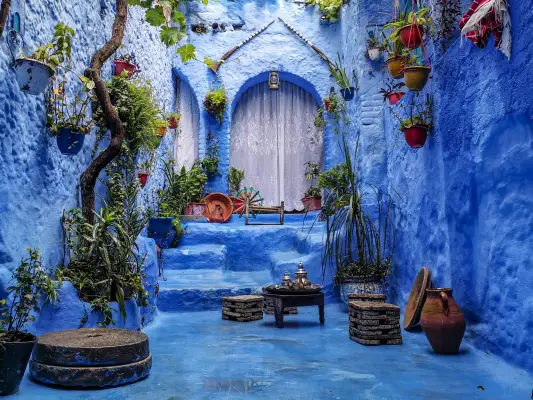
Winter in Morocco isn’t just about chasing the warmest sun; it’s about experiencing the country in a calmer, more local rhythm. The big sights are still there – the blue lanes of Chefchaouen, the mosques and madrasas of Fez, the coastal ramparts of Essaouira – but you’ll often share them with more Moroccans and fewer tour buses. This changes the feel of the trip in ways that are hard to quantify but easy to appreciate once you’re there.
In Marrakech, winter is perfect for slow exploration. Spend a morning wandering the medina, then retreat to a rooftop café with mint tea when the sun is high. Visit the Bahia Palace and El Badi Palace when the light is soft, and schedule your Majorelle Garden visit early in the day to avoid queues. Because the heat isn’t oppressive, you can comfortably walk between sites instead of constantly ducking into shade. Having a working data connection makes it much easier to navigate between them, especially when you use live location sharing to meet friends or a guide in the maze-like medina streets.
On the coast, winter surf culture is in full swing. Towns like Taghazout, Tamraght, and Imsouane near Agadir draw surfers chasing Atlantic swells, with water temperatures around 17–19°C (63–66°F). Wetsuits are standard, but the air outside is often warm enough to hang out in light clothes between sessions. If you’re working remotely, it’s increasingly common to see people doing a few hours of laptop time in the morning, surfing in the afternoon, then jumping back online in the evening. Reliable mobile data is part of what makes that lifestyle possible, similar to how digital workers base themselves in places covered by solid Caucasus and Georgia eSIM options for mountain city life.
Winter is also prime time for the Atlas Mountains. Day hikes around Imlil or Ourika Valley are cooler and more pleasant than in summer, though higher elevations can see snow. You can do a day trip from Marrakech to Imlil, hike for a few hours with views of snow-capped Toubkal, then return to the city in the evening. If you’re doing any independent trekking, having maps and a way to message your guesthouse if you’re running late is important; coverage is decent in many valleys but not universal. As always, download offline maps and don’t rely solely on your phone for navigation in the mountains.
Culturally, winter 2026 will likely see a steady calendar of festivals and events in major cities, though exact dates can shift year to year. Even without a specific event, evenings in cities like Rabat and Casablanca have a lively café culture, with locals gathering over coffee, pastries, and football on big screens. It’s a good time to practice your French or basic Darija Arabic phrases, look up menu items on your phone, and follow local recommendations you find on social media in real time. This is where having constant data turns a generic trip into something more spontaneous: you can see a local band tagged on Instagram and actually go find their show that night.
Practical Tips: Money, Customs, and Winter-Specific Advice
Beyond weather and Wi‑Fi, a few practical details can make or break your Morocco in winter 2026 experience. Let’s start with money. The currency is the Moroccan dirham (MAD), and while card acceptance is improving in big cities and modern hotels, you’ll still need cash for many medina purchases, taxis, and small restaurants. ATMs are widely available in cities, but they can be scarce in smaller towns and desert areas. I recommend withdrawing a reasonable amount in your arrival city, then topping up as needed. Use your phone’s currency converter to keep track of prices; with live data, you can quickly sanity-check whether that rug price really is a “special winter discount” or just a starting point for negotiation.
Language-wise, Moroccan Arabic (Darija) and Amazigh (Berber) languages are widely spoken, with French commonly used in business and tourism. English is increasingly understood in major tourist areas, but you’ll still hit moments where a translation app is your best friend. I’ve used my phone countless times to show a translated sentence to a grand taxi driver or to clarify a food allergy in a small café. This is another reason I don’t like relying solely on patchy hotel Wi‑Fi; having mobile data means your translation tools work in the exact moment you need them, not just back at the riad later.
Winter also brings some packing quirks. You’ll want layers: a base layer, a light fleece or sweater, and a windproof or light down jacket, plus a hat and gloves if you’re heading to the desert or mountains. Many traditional riads have beautiful tiled courtyards that can feel chilly in the mornings and evenings, even if your room has a heater. Shoes that can handle occasional rain in cities and dust in the desert are ideal. Power outlets are typically European-style (Type C and E), so if you’ve already traveled in Europe with a UK or mainland Europe eSIM setup, you can reuse the same plug adapters.
Culturally, winter doesn’t change basic etiquette. Dress modestly, especially in medinas and smaller towns: shoulders covered, shorts kept to the knee or longer, and more conservative outfits for visiting religious sites. Alcohol is available in many hotels, bars, and some supermarkets, but not everywhere, and it’s generally not consumed in public streets. Always ask before photographing people, especially in markets. Bargaining is expected in souks, but it doesn’t have to be aggressive; think of it as a conversation. Having a calculator app handy (and data if you’re checking typical price ranges) can help you avoid wildly overpaying in the heat of the moment.
Finally, keep an eye on public holidays and Ramadan dates when planning winter 2026. Ramadan will likely begin in late February or March 2026, depending on the lunar calendar, so most of the core winter months (December and January) will operate on a normal schedule. During Ramadan, opening hours and food service can shift, but in winter 2026 you’ll mostly avoid that overlap if you travel earlier in the season. Still, it’s worth double-checking opening hours for specific museums or sites online using your data connection, especially around New Year’s and local holidays.
When Is the Best Time to Visit Morocco in Winter 2026?
If you’re trying to decide exactly when to go, think in terms of micro-seasons rather than just “winter.” Early December is often one of my favorite times: mild weather, relatively low prices, and fewer crowds because many people are saving their trips for Christmas. Mid-December through the first week of January is busier and more expensive, especially in Marrakech and Agadir, as Europeans escape their own winters for a bit of sun. If you’re on a budget, consider arriving just after New Year’s, when prices often drop again but the weather remains similar.
January is generally the coolest month, but still very manageable if you pack layers. It’s a good time for city exploration, surfing, and cultural trips, with fewer crowds at major sights. Desert tours operate throughout January, though nights are at their coldest, so prioritize camps with solid heating or plenty of blankets. February starts to see a slight warm-up, especially toward the end of the month, and can be a sweet spot for those wanting a bit more warmth without full-on spring crowds. By March, you’re moving out of “true winter” into shoulder season, with more greenery in the countryside and slightly higher temperatures.
For digital nomads or longer stays, one strategy I’ve seen work well is to split time: a few weeks in a city like Marrakech or Rabat, then a week on the coast in Agadir or Taghazout. That way, you’re not betting your whole trip on one microclimate. If a rainy front settles over the coast, you can enjoy museum days and hammams in the city; if a cold snap hits inland, you can retreat to the relatively milder sea air. Having consistent mobile data throughout makes these last-minute shifts much easier to pull off, similar to how long-stay travelers hop between regions in Asia using flexible China and regional eSIM plans as they chase the best weather.
In terms of booking timing, flights for peak holiday periods (Christmas–New Year’s) are worth locking in a few months in advance, while January and early February can be more flexible. Accommodation in popular riads with strong reviews and good heating can fill up even in winter, so if you have your eye on a specific place, don’t leave it to the last minute. For eSIMs and connectivity, the nice part is that you can decide relatively late; buying and installing an eSIM a day or two before departure is usually enough, as long as your phone is compatible and unlocked.
Conclusion: Making Morocco in Winter 2026 Easy, Warm, and Connected
Morocco in winter 2026 offers a combination that’s hard to beat: warm cities without the furnace-like summer heat, dramatic desert landscapes under clear skies, and a slower, more local feel in places that are packed in spring and autumn. The trade-offs – cooler nights, the occasional rainy day, and shorter daylight hours – are easy to manage when you know what to expect and pack accordingly. The real difference between a smooth winter trip and a stressful one often comes down to logistics: how easily you move between cities, how quickly you can adjust plans, and how reliably you can get online when you need directions, translations, or a last-minute booking.
That’s where planning your connectivity upfront pays off. Instead of gambling on airport SIM stalls or paying steep roaming fees, setting up a Morocco travel eSIM before you fly means you land ready: maps working, WhatsApp live, and the ability to coordinate with your riad or desert tour from the moment you clear immigration. It’s the same principle that makes an eSIM invaluable for trips to places like Lapland or the Caribbean – you remove one of the biggest sources of friction before it has a chance to derail your first day. With your connection handled, you can focus on what actually matters: sipping mint tea on a sunlit rooftop, watching the colors change over the dunes at sunset, and wandering medina alleys knowing you can always find your way back.
If you build your winter 2026 itinerary around a couple of warm bases, a well-planned desert side trip, and a reliable eSIM for navigation and communication, Morocco becomes exactly what you’re hoping for: an easy escape from winter, with just enough adventure to feel like you’ve truly gone somewhere different.