





 Germany
 Japan
Japan South Korea


























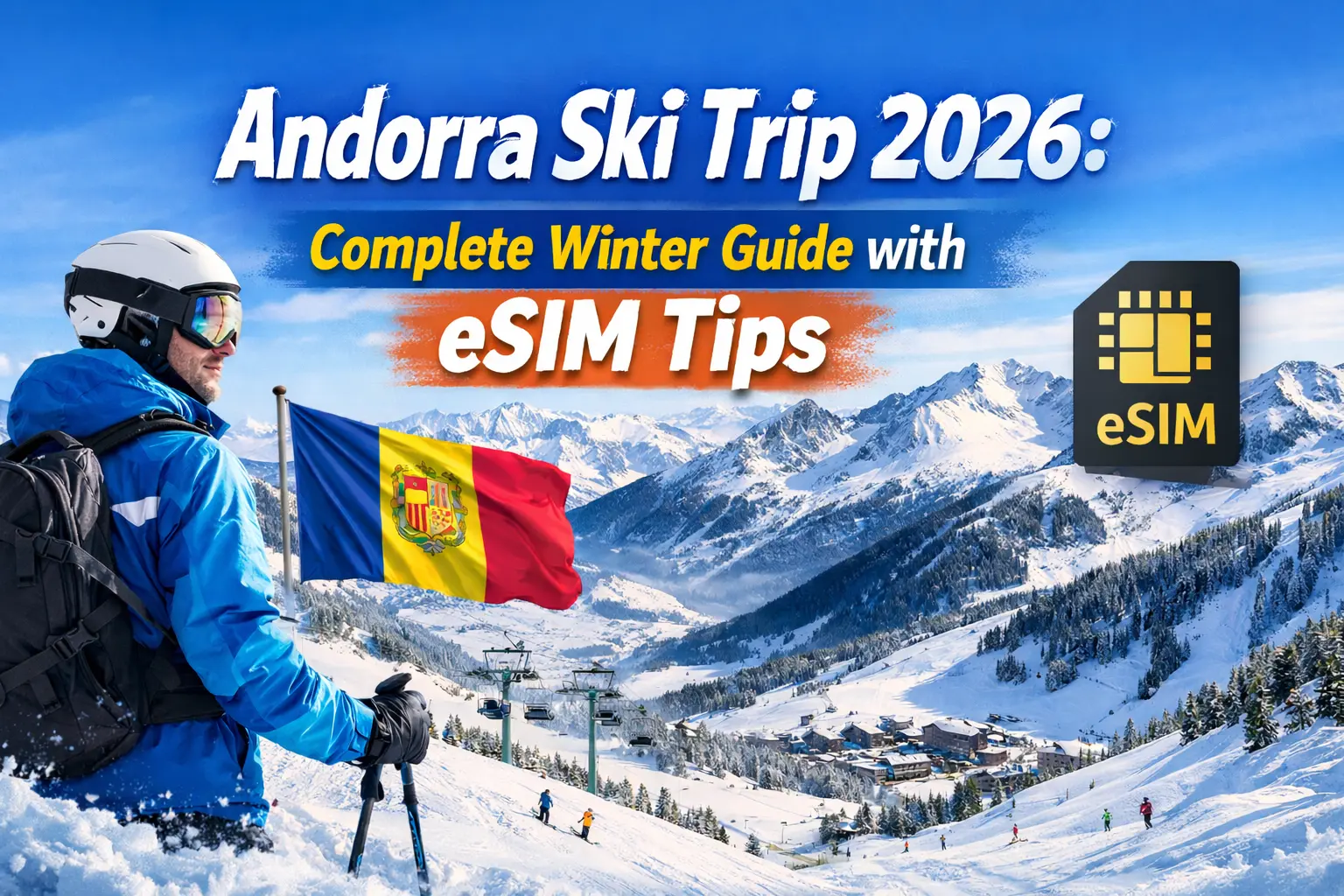
Andorra Ski Trip 2026: Complete Winter Guide with eSIM Tips
If you’re eyeing an Andorra ski trip 2026, you’re already on the right track. This tiny country tucked between France and Spain punches way above its weight for snow, scenery, and surprisingly good value. The twist most people don’t expect? The most stressful part often isn’t the skiing at all—it’s the logistics: getting there from Barcelona or Toulouse, figuring out lift passes, and staying connected in the mountains without getting hammered by roaming fees. That’s where planning ahead, especially with an eSIM-based travel setup, makes a huge difference.
In this complete Andorra winter travel guide, we’ll walk through everything you need for a smooth Andorra ski holiday 2026: how to choose between Grandvalira and Pal-Arinsal, what airports and transfers make the most sense, what a realistic budget looks like, and how to handle Andorra mobile data for tourists without spending your beer money on roaming. I’ll also share specific eSIM for Andorra travel tips based on what actually works on the ground—like how much data you really need for a week and what to do if your phone struggles to latch onto a local network in a snowstorm. By the end, you’ll have a clear, practical plan you can actually book and follow.
Why Andorra for Your 2026 Ski Trip?
Andorra doesn’t always make the top of the list when people think about European ski destinations, but that’s part of its charm. Instead of the sky-high prices of the French Alps or the crowds of Austria, you get modern lifts, big linked ski areas, and a more relaxed vibe. For 2026, Andorra is especially appealing because many travelers are looking for better value without compromising on snow reliability. The country’s main resorts sit between roughly 1,700 and 2,600 meters, which usually means a solid snowpack from late December through March, with January and February being the most reliable for powder.
There are two main ski areas: Grandvalira (which includes sectors like Pas de la Casa, Soldeu, El Tarter, and Grau Roig) and the Vallnord area (Pal-Arinsal and Ordino-Arcalís). Grandvalira is the big one, with over 200 km of pistes, fast lifts, and a broad mix of terrain. Vallnord is smaller but often less crowded and great for families or riders who prefer a more laid-back feel. In my experience, if you’re planning your first Andorra ski trip and want that “big mountain” resort feeling, Grandvalira is the safer bet; if you’re more about tree runs, learning, or keeping costs down, Pal-Arinsal can be ideal.
Another reason Andorra works so well in 2026 is that it’s outside the EU but uses the euro and has duty-free shopping. That means you can pick up cheaper gear, spirits, or perfume in places like Andorra la Vella or Pas de la Casa. It also means your regular EU roaming plan might not cover you here, even if it works in nearby France or Spain. I’ve seen plenty of travelers assume their “Europe” package includes Andorra, only to get a nasty surprise on their bill. That’s exactly why a dedicated travel eSIM or regional Europe eSIM is worth lining up before you go, especially if you’re transiting through Barcelona or Toulouse on the way in.
From a lifestyle perspective, Andorra hits a nice balance between ski-hard and chill-hard. Après-ski in Pas de la Casa can get wild, with bars like Paddy’s and Milwaukee buzzing until late, while Soldeu and El Tarter lean more toward cozy wine bars and good food. If you’re more of an Andorra digital nomad winter type, you’ll probably gravitate toward Andorra la Vella or Escaldes-Engordany, where you can mix spa time at Caldea with decent cafés for working online. Just remember that your connectivity setup will matter even more if you’re trying to work from the mountains, which is where a stable eSIM plan really earns its keep.
Getting to Andorra and Moving Between Resorts
Because Andorra has no airport or train station of its own, getting there is a two-step process: fly or train into Spain or France, then continue by road. Most people heading on an Andorra ski trip 2025 will arrive via Barcelona-El Prat (BCN) or Toulouse-Blagnac (TLS). Barcelona is usually the easiest option, with more flight choices and often cheaper fares, especially from the UK and other parts of Europe. From Barcelona, the drive to Andorra la Vella is about 3 hours in good conditions. From Toulouse, you’re looking at roughly 2.5–3 hours, but winter weather over the passes can slow things down.
Shared shuttle buses are the most straightforward option if you don’t want to drive. Companies like Andbus and Directbus run regular services from both Barcelona and Toulouse to Andorra, with stops in Andorra la Vella and some resort areas. In 2024–2025, typical one-way prices are around €35–€45 per adult, depending on the route and time. These buses usually have Wi‑Fi on board, but coverage can drop in the mountains, which is another reason having your own data connection via eSIM is useful. If your flight is delayed and you need to message your hotel or adjust your shuttle booking, you don’t want to rely on patchy bus Wi‑Fi or airport hotspots.
If you prefer the flexibility of a rental car, you’ll find the best deals at Barcelona or Toulouse airports. Just be sure to request winter tires or snow chains. I’ve driven up to Andorra in late January and hit sudden snow just past La Seu d’Urgell, where chains became mandatory. Police sometimes set up checkpoints in bad weather, and if you’re not properly equipped, you can be turned back. Parking in resorts like Soldeu or Pas de la Casa can be tight and paid (often €10–€20 per day in covered garages), so factor that into your budget. If you’re used to driving in the Alps, the Andorran roads won’t shock you, but they’re still mountain roads: lots of bends, potential ice, and slow-moving trucks.
Once you’re in Andorra, getting between resorts is fairly simple. Local buses connect Andorra la Vella with Grandvalira sectors and with Pal-Arinsal, though schedules can be less frequent in the evenings. Taxis exist but are not cheap for long distances; a ride from Andorra la Vella to Soldeu can easily run €30–€40 or more, especially late at night. This is where having real-time bus timetables on your phone helps. With a regional data plan similar to the ones described in EasyAlo’s Spain eSIM data guide, you can check apps like Moovit or Google Maps for live updates and avoid waiting 40 minutes in the cold for a bus that isn’t coming.
For travelers combining Andorra with a broader Pyrenees or European trip, it can make sense to treat the country as one stop on a longer loop. I’ve met riders who fly into Barcelona, spend a few days in the city, head up to Andorra for a week of skiing, then continue to Toulouse or even over to the Alps. If that’s your plan, think about your connectivity regionally rather than country by country. A multi-country eSIM that already works in Spain and France will usually continue to work as you cross into Andorra, even if your home carrier’s roaming package doesn’t. That continuity can be the difference between a seamless trip and a constant hunt for new SIM cards.
Staying Connected: eSIM, Local SIM, and Wi‑Fi in Andorra
Because Andorra sits outside the EU roaming zone, connectivity is where many travelers get caught out. You land in Barcelona, everything works fine, then you cross the border into Andorra and suddenly your phone shows “no service” or starts using a non-inclusive roaming network at eye-watering rates. I’ve seen people rack up €50 in charges in a single afternoon of Google Maps and Instagram because they didn’t realize their plan excluded Andorra. Planning your eSIM for Andorra travel before you leave home is the simplest way to avoid that trap.
First, a quick reality check: Andorra has only one mobile operator, Andorra Telecom. It’s reliable and offers 4G coverage across most resort areas and 5G in the main towns, but it’s not set up with the same tourist-friendly prepaid ecosystem you might find in, say, Italy or France. You can buy a local SIM in Andorra la Vella, but kiosks are limited, opening hours can be short on Sundays, and you’ll need your passport. On top of that, if your phone is eSIM-only (like recent iPhones sold in the US), you may not be able to use a physical local SIM at all. This is where a dedicated travel eSIM or regional Europe eSIM, such as the ones EasyAlo offers alongside its France eSIM packages, becomes much more practical.
So how does an eSIM actually help on an Andorra ski holiday 2026? Instead of hunting for a store, you buy and install the eSIM profile before you fly. When you cross into Andorra, your phone automatically connects to a supported partner network (often Andorra Telecom via a roaming agreement). You keep your physical SIM in the phone for your regular number—useful for receiving SMS codes from your bank—while using the eSIM for data. In my experience, this dual-SIM setup is a lifesaver when you’re coordinating airport transfers or meeting friends in a crowded resort bar. You don’t have to choose between staying reachable on your normal number and having cheap data.
Coverage-wise, expect solid 4G in Grandvalira villages like Soldeu, El Tarter, and Pas de la Casa, and in Pal-Arinsal’s base areas. On the slopes, signal can vary on high ridges or in deep valleys, but I’ve had no trouble loading offline-capable maps, checking weather, or sending messages from most pistes. If you plan to work remotely during an Andorra digital nomad winter, your best bet is to base yourself in Andorra la Vella or Escaldes-Engordany, where 5G and fiber-backed Wi‑Fi in cafés and apartments are more common. Just don’t assume every rental has fast internet—ask for actual speeds or a screenshot of a speed test before you book.
As a rough guide, most people use 3–5 GB of data for a one-week ski trip: maps, messaging, social media, a bit of video calling, and some browsing. If you’re streaming a lot of video or working online, 10 GB is safer. To get a feel for how data usage scales in other destinations, you can look at EasyAlo’s Germany eSIM guide for Christmas markets, which breaks down similar winter travel patterns. The key is to overestimate slightly; it’s better to finish the week with spare data than to be rationing megabytes on day four while your friends are posting chairlift selfies.
Wi‑Fi is widely available in hotels, many apartments, and some mountain restaurants, but it’s rarely enough on its own. I’ve stayed in otherwise great hotels in Soldeu where the Wi‑Fi slowed to a crawl between 5 p.m. and 8 p.m. when everyone came back from the slopes and started streaming. That’s fine if you just want to scroll messages, but not if you’re trying to jump on a Zoom call with your team back home. Having your own eSIM data as a backup means you can tether your laptop and keep working, or at least stream a movie without endless buffering.
How to Set Up Your eSIM Before You Go
The smoothest way to use eSIM in Andorra is to set everything up at home while you still have stable Wi‑Fi. With EasyAlo, you typically receive a QR code and installation instructions by email after purchase. On most recent iPhones and Android flagships, you go to your mobile network settings, choose “Add eSIM” or “Add mobile plan,” and scan the code. The eSIM profile installs in a couple of minutes. Importantly, the plan’s validity only starts when you first connect to a supported network in the covered region, so you can safely install it a few days before your trip without “wasting” days of service.
If you’ve never used eSIM before, it may help to review a step-by-step walkthrough like EasyAlo’s iPhone eSIM activation guide. The interface changes slightly between iOS and Android, but the principles are the same: keep your home SIM as the default for calls and texts, set the eSIM as the default for mobile data, and turn on data roaming for the eSIM line only. That last part is crucial—if you leave roaming active on your home SIM, your phone might happily roam at your carrier’s expensive rates while your eSIM sits idle.
Once you arrive in Barcelona or Toulouse, you can test that the eSIM connects properly before heading into the mountains. If you’re using a regional Europe plan that also covers Spain or France, you’ll see it latch onto a local network within a minute or two. This is also a good time to download offline Google Maps for Andorra and your transit cities, as well as apps like Ski Andorra or resort-specific apps that show lift status and piste maps. I’ve learned the hard way that relying solely on paper trail maps in windy conditions is a recipe for losing half your group after lunch.
What If Something Goes Wrong with Your eSIM?
No connectivity setup is bulletproof, so it’s smart to know what to do if your eSIM misbehaves. Common issues include the eSIM not activating, not connecting to a local network, or data working but at painfully slow speeds. In most cases, the fix is as simple as toggling airplane mode on and off, restarting the phone, or manually selecting a different partner network in the mobile settings. If you’re not sure where to start, EasyAlo’s eSIM troubleshooting guide walks through the most effective quick fixes.
From experience, the biggest “gotcha” is forgetting to enable data roaming for the eSIM line. Because your eSIM is technically roaming onto Andorra Telecom or a partner network, roaming must be allowed for that line, even if you usually keep roaming off to avoid charges. Another overlooked setting is the “allow mobile data switching” feature on some phones, which can silently move your data usage back to your home SIM if the eSIM signal dips. I always turn that off before a trip so I’m 100% sure all mobile data is flowing through the travel eSIM only.
If you still can’t connect after basic troubleshooting, use any available Wi‑Fi (airport, hotel, café) to contact support. Having your eSIM provider’s support email or chat bookmarked before you leave is a small step that can save a lot of frustration later. In the absolute worst case, you can fall back on hotel Wi‑Fi and maybe a short burst of your home carrier’s roaming for emergencies, but in practice, a correctly set up eSIM works smoothly in Andorra, especially in and around the major resorts.
Best Ski Resorts in Andorra and What to Expect
Choosing where to base yourself is one of the most important decisions for your Andorra ski trip itinerary. While the country is small, the feel of each resort can be quite different. Grandvalira is the star of the show, with more than 200 km of linked pistes and multiple base villages. Within Grandvalira, Soldeu and El Tarter are often the sweet spot for mixed groups: good intermediate terrain, decent après, and a range of accommodation. Pas de la Casa, right on the French border, tends to attract younger, more party-focused crowds and has some of the liveliest nightlife in the Pyrenees.
Soldeu sits at around 1,800 meters with lifts rising to about 2,250 meters. It’s known for wide, well-groomed runs and has hosted World Cup races, which says a lot about the quality of the slopes. You’ll find plenty of ski-in/ski-out or near-slope accommodation, from mid-range hotels to more upscale options. El Tarter, just down the road, is quieter and more family-oriented but still well-connected to the main Grandvalira area. If you’re traveling with kids or beginners, basing in El Tarter and riding up from there can be less overwhelming than jumping straight into the bustle of Soldeu or Pas.
Pas de la Casa, by contrast, is all about energy. The town is compact, with a slightly more utilitarian feel, but it’s unbeatable if you want to ski hard all day and go out late at night. Bars like Paddy’s, Underground, and Billboard get busy, and prices are lower than in many Alpine resorts. Because Pas is high (around 2,080 meters), snow cover is usually good, but the exposed location can mean more wind and whiteout days. On those days, having reliable data on your phone really pays off; you can check live lift status, see which areas are open, and coordinate with friends if you get separated in the fog.
On the Vallnord side, Pal-Arinsal offers a more compact but very friendly ski area, ideal for intermediates and families. The two sectors are linked by a cable car, and the tree-lined runs around Pal can be a joy on snowy days when higher slopes elsewhere are socked in. Ordino-Arcalís, a separate area under the same umbrella, is a freeride favorite with more off-piste options and a wilder feel. It’s a bit further from Andorra la Vella, so it works best if you have a car or don’t mind the longer bus ride. If you’re exploring multiple resorts, a regional data eSIM similar to those EasyAlo offers for places like Italy’s big ski regions will help you keep up with weather and avalanche bulletins across different valleys.
For non-skiers or mixed groups, Andorra still has plenty going on. Snowshoeing, snowmobile tours, and dog sledding are available in both Grandvalira and Vallnord areas. In Andorra la Vella, the Caldea spa complex is a major draw, with thermal pools, saunas, and wellness treatments—great for a rest day or a bad-weather afternoon. Many people underestimate how tired they’ll be after three or four days of skiing; planning one “off” day in your Andorra winter travel guide is often wiser than trying to ski every single day and burning out by midweek.
Practical Travel Tips: Money, Language, Gear, and Safety
On the practical side, Andorra uses the euro, even though it’s not part of the European Union. ATMs are easy to find in major towns and resort villages, and card payments are widely accepted, including contactless. Still, it’s smart to carry a bit of cash—€50–€100—for small mountain cafés, ski lockers, or older taxis that might not take cards. Prices are generally lower than in the Alps, but they’ve crept up in recent years. A coffee on the mountain might run €2–€3, a beer €4–€6, and a basic lunch €12–€18. Lift passes for Grandvalira in 2025 are likely to be in the range of €60–€70 per adult per day, with discounts for multi-day passes.
Catalan is the official language, but you’ll hear a mix of Spanish, French, and Portuguese, and English is widely spoken in tourist areas. Simple Spanish phrases go a long way, especially in smaller bars and shops. Staff in rental shops and ski schools are used to international visitors, so communication isn’t usually a problem. What can be a problem, though, is miscommunication about meeting points and times—especially if you’re coordinating lessons or guiding days. Sharing your live location through apps like WhatsApp, which requires a stable data connection, is a lot easier than trying to describe “that café near the blue run with the red umbrellas.”
In terms of gear, you can either bring your own or rent in resort. Most people flying in choose to rent to avoid airline baggage fees and the hassle of hauling skis or boards through airports and on buses. Rental shops in Soldeu, El Tarter, and Pas de la Casa are well stocked with recent equipment from brands like Salomon, Rossignol, and Burton. Prices vary, but you might expect around €120–€180 for a six-day ski or snowboard set (boots, skis/board, poles). Booking online before you arrive can save 10–20% and help you avoid queues, especially in peak weeks like New Year or school holidays.
Safety-wise, Andorra’s resorts are generally well-run and patrolled, but mountain rules still apply. Helmets are strongly recommended for all ages. Weather can change quickly, and whiteouts are not uncommon. I always keep a basic safety kit in my jacket: small first-aid items, a power bank, and a printed copy or offline version of the piste map. If you like to explore off-piste or between the marked runs, avalanche gear and knowledge are essential. In those situations, having an eSIM-powered data connection lets you check real-time avalanche bulletins and weather forecasts, much like you might do in other mountain destinations that EasyAlo covers, such as in its UAE winter mountain road trip guide.
One counterintuitive tip: don’t rely entirely on resort Wi‑Fi for safety-critical communication. On a busy day, everyone is hitting the same access points, and speeds can drop. If a friend injures themselves on the hill and you need to coordinate with ski patrol or send your location, you’ll be glad to have your own mobile data. It’s the kind of thing you hope you never need, but when you do, it’s priceless.
When to Go: Best Time for an Andorra Ski Holiday 2026
Picking the right week can make or break your Andorra ski trip 2026. The season typically runs from early December to early April, but conditions vary by month. December can be hit or miss for snow, especially in the lower areas, though Grandvalira’s snowmaking is extensive and often keeps key runs open even in lean years. Christmas and New Year are festive but busy, with higher prices and more crowded slopes. If you’re flexible and not tied to school holidays, I usually recommend mid-January as a sweet spot: colder temperatures, good snow, and fewer people.
February is prime time for snow but also for crowds, thanks to school holidays across Europe. Expect busier lifts, especially in Pas de la Casa and Soldeu, and higher accommodation prices. If you’re traveling with kids, this might be your only option, in which case booking early is essential. Aim to secure flights, transfers, and accommodation by late summer or early autumn 2024 for a February 2025 trip. Also, if you plan to work remotely during this period, remember that more users in the resorts means more strain on shared Wi‑Fi; having your own eSIM data becomes even more valuable.
March can be fantastic, with longer days and often a more relaxed atmosphere. Snow conditions are usually still solid, especially in higher areas like Pas de la Casa and Ordino-Arcalís. You might get a mix of sunny spring days and fresh snowfalls. For many Andorra digital nomad winter types, March is the ideal time to combine work and skiing: you can log on in the morning, ski a few hours in the afternoon, and still enjoy daylight into the early evening. Just keep an eye on south-facing slopes, which can soften quickly in the sun.
April is more of a gamble. Some seasons stay strong right to the closing date, while others see a rapid melt, especially on lower runs. If you’re fixated on Easter, aim for early April and choose higher-base resorts like Pas de la Casa or Soldeu. This is also when lift pass and accommodation deals start to appear, which can be tempting if you’re on a budget. For connectivity, late-season trips are no different—your eSIM will work the same—but you may find that some mountain restaurants or services start reducing hours as the season winds down.
One nuance people often overlook is how daylight and temperature affect your daily rhythm. In January, it can be properly cold, with temperatures dropping below -10°C at night and staying below freezing during the day. That’s great for snow but harder on devices; phone batteries drain faster in the cold, so a small power bank is worth packing. In March, you’ll have warmer afternoons, which are perfect for terrace lunches but can make snow heavier by mid-afternoon. Planning your ski day around these patterns—and having the flexibility to check live conditions on your phone—will help you get the most out of whichever week you choose.
Data Budgeting and Sample Andorra Ski Trip Itinerary with eSIM
Let’s talk specifics: how much mobile data do you actually need for a week-long Andorra ski holiday 2026, and how does that fit into a realistic itinerary? For most travelers, 5 GB is a comfortable baseline for seven days if you’re using data mainly for navigation, messaging, social media, and occasional video calls. Heavy users—people uploading lots of video, working online, or streaming HD content—should look at 10 GB or more. To put it in context, EasyAlo’s FAQ for Guatemala suggests 1–3 GB for light users on a week-long trip; skiing adds more photo and video sharing, plus frequent map checks, which is why 5 GB is a safer bet here.
Here’s how that might break down in practice. Consider a typical one-week Andorra ski trip itinerary with eSIM and mobile data tips built in. Day 1: you land in Barcelona, turn on your eSIM, and use maps to find your shuttle, message your accommodation, and maybe look up a supermarket en route. That’s perhaps 200–300 MB. Days 2–6: you’re skiing. Each day you use Google Maps or resort apps, WhatsApp, a bit of Instagram, and maybe one short video call back home. That might average 400–600 MB per day, so roughly 2–3 GB total. Day 7: you travel back, again using maps, messaging, and a bit of browsing—another 200–300 MB. Add some buffer, and you’re comfortably around 4–5 GB for the week.
If you’re planning to work remotely or stream a lot of content, you can easily double that. Video calls on Zoom or Teams can use 500–800 MB per hour, especially with video on. HD streaming on Netflix or YouTube is similar. In those cases, a 10 GB plan or even 15 GB might be more appropriate. For comparison, EasyAlo’s Indonesia eSIM data planning article shows how quickly data can go when you’re relying on it for both work and play. The same logic applies in Andorra; the mountains don’t change how much data a Zoom call uses.
One practical strategy I use is to download as much as possible while on Wi‑Fi: offline maps, playlists, podcasts, and even a few episodes of a show for the evenings. That way, your mobile data is reserved for real-time tasks like navigation, messaging, and checking weather or lift status. Also, turn off auto-play for videos in social media apps and limit background data for apps you don’t need while traveling. These small tweaks can stretch a 5 GB plan surprisingly far without feeling like you’re constantly rationing.
If you’re combining Andorra with other European destinations, it’s worth thinking about your data plan more broadly. A regional eSIM that also covers countries like Spain, France, and maybe Italy or the UK can simplify things enormously. Instead of juggling multiple local SIMs, you run one plan across your entire route. EasyAlo’s coverage in destinations like the United Kingdom and Greece illustrates how regional bundles can support multi-country itineraries without constant SIM swapping. For a 2–3 week Europe trip with a week in Andorra, 15–20 GB total is a realistic target for most travelers.
Bringing It All Together: A Connected, Stress-Free Andorra Ski Trip 2026
Planning an Andorra ski trip 2026 isn’t just about picking a resort and hoping for good snow. It’s about stitching together a lot of moving parts—flights into Barcelona or Toulouse, mountain transfers, accommodation, lift passes, gear rental, and yes, a solid connectivity plan—so that once you arrive, you can actually relax and enjoy the mountains. Andorra rewards that bit of upfront effort with excellent value, modern lifts, and a fun mix of nightlife and quiet corners, depending on where you base yourself.
If there’s one consistent theme from years of winter travel, it’s that connectivity problems cause outsized stress: trying to find your shuttle in a dark airport car park, meeting friends in a busy resort, dealing with a delayed flight, or needing to check avalanche bulletins on a storm day. Relying on hotel Wi‑Fi and hope doesn’t cut it anymore, especially in a non-EU country where your home plan might not protect you from roaming charges. Setting up an eSIM before you leave—choosing the best eSIM for Andorra ski trip 2026 for your style of travel and data needs—turns all of that into a non-issue.
The practical steps are straightforward: decide on your dates and resort (Grandvalira or Vallnord), book your flights and transfers, sort your accommodation and rentals, then choose an eSIM plan that covers Andorra and any surrounding countries you’re visiting. Install it at home, test it when you land in Spain or France, and let it quietly handle your maps, messages, and calls while you focus on carving turns and finding the best mountain lunch spots. If you’re unsure which data allowance fits your plans, you can always look at how EasyAlo scales plans in other destinations like Mexico’s winter sun hotspots and adjust up or down based on how connected you like to be.
With that in place, Andorra becomes exactly what it should be: a place where your biggest decisions are whether to ski Soldeu or Pas de la Casa today, whether to book that extra lesson, and whether you’ve earned another round at après. The tech quietly supports the trip instead of hijacking it. That’s the real goal of this complete winter guide to Andorra ski resorts and eSIM: not just to get you there, but to keep you connected in a way that feels effortless, so your memories are about fresh snow and good company—not about surprise bills and dropped connections.