






 Germany
 Greece
 Portugal
 United Arab Emirates























Best Caribbean Islands for Winter Sun 2026 with eSIM Tips
If you’re already daydreaming about escaping grey skies and icy commutes, the best Caribbean islands for winter sun 2026 are probably high on your list. But there’s a modern twist to planning that beach break: you’re not just choosing an island; you’re choosing where you can actually stay connected without burning through your savings on roaming. I’ve learned the hard way—standing in a slow immigration queue in Barbados, trying to load my hotel confirmation on a dead roaming signal—that sunshine is only half the story. The other half is having maps, messaging, and ride-hailing apps ready the moment you land, ideally with a reliable travel eSIM already installed. In this guide, we’ll go beyond pretty beaches and look at which Caribbean islands offer the best mix of winter sun, easy logistics, and solid mobile data—plus how to use an eSIM to keep everything running smoothly.
Why the Caribbean Is Perfect for Winter Sun 2026
There’s a reason the Caribbean keeps topping winter wishlists, especially for 2026. While much of North America and Europe sits under low clouds and rain, you can be stepping off a plane into 26–29°C temperatures, with sea water that feels like a warm bath. Between December and March, many islands enjoy their driest, sunniest months, with average rainfall dropping compared to the hurricane season that runs roughly June to November. In practical terms, this means far fewer days ruined by storms, more predictable beach weather, and a higher chance that your carefully planned seven-day escape will actually deliver seven usable beach days.
Another big reason the Caribbean works so well for winter is accessibility. From hubs like Miami, New York, Toronto, and London, there are nonstop flights to popular islands such as Barbados, Jamaica, the Dominican Republic, and St. Lucia. That’s especially handy if you’re squeezing a trip between work commitments and can’t afford long layovers. I’ve done the overnight London–Barbados flight, landed at 3 p.m., and still made it to the beach for sunset. The time zone differences are also manageable: many islands sit between GMT-5 and GMT-4, which is ideal if you’re planning a bit of remote work or need to stay loosely synced with colleagues back home.
For 2026 specifically, there’s another trend worth noting: more islands are leaning into remote work and long-stay visitors. Places like Barbados and Antigua have already experimented with digital nomad visas, and others are improving co-working spaces, upgrading fibre connections, and expanding 4G/5G mobile coverage. This shift matters even if you’re not a full-time nomad. It means better Wi‑Fi in guesthouses, more cafés where you can upload photos or hop on a quick video call, and more reliable networks that support eSIM-based data plans. If you’ve ever struggled with unstable hotel Wi‑Fi while trying to download boarding passes, you’ll appreciate how big a difference that makes.
Finally, the Caribbean offers a huge range of experiences within a relatively compact region. You can choose high-energy resorts in Punta Cana, quiet boutique hotels in St. Kitts, or nature-heavy escapes in Dominica. Because islands are close together, it’s realistic to combine two or three in one trip, especially if you’re using a regional travel eSIM for Caribbean vacations that works across borders. I’ve hopped from Martinique to St. Lucia with the same eSIM active, and it felt almost like crossing between European countries—same phone, same apps, just a new stamp in the passport and a different accent at the bar.
How to Get There and Get Around the Caribbean in 2026
Getting to the Caribbean in 2026 is generally easier than it was a decade ago, but the details still matter. Major hubs like Miami, Atlanta, New York JFK, Toronto Pearson, and London Gatwick feed non-stop flights into big destinations such as Montego Bay (MBJ), Punta Cana (PUJ), San Juan (SJU), and Bridgetown (BGI). If you’re coming from Europe, you’ll see charter-heavy routes to the Dominican Republic and Cuba, while scheduled airlines like British Airways, Virgin Atlantic, Air France, and KLM serve islands like Barbados, St. Maarten, and Curaçao. For some of the smaller islands—think Dominica, St. Vincent, or Anguilla—you’ll usually connect via a regional hub such as Antigua (ANU) or St. Maarten (SXM). This is where having mobile data on arrival is critical; I’ve had tight 50-minute connections in Antigua where I needed live gate updates, and relying on airport Wi‑Fi would’ve been a gamble.
Once you’re in the region, island hopping is part of the fun, but it can be logistically quirky. LIAT used to dominate many inter-island routes, but in recent years smaller carriers like Caribbean Airlines, InterCaribbean Airways, and Winair have become more important. Schedules sometimes change last-minute, especially in shoulder seasons, so it’s wise to keep airline apps updated and notifications turned on. This is where a regional eSIM that covers multiple islands becomes more than a nice-to-have. Instead of hunting for a new local SIM in each airport, you can keep the same data plan active across borders—similar to using a regional eSIM for Mexico and nearby countries when you move around Central America.
On the ground, how you get around varies a lot by island. In bigger islands like Jamaica and the Dominican Republic, you’ll find ride-hailing options (often local apps or limited Uber coverage), established taxi stands at airports, and car rental desks from brands like Hertz and Avis. On smaller islands—say, Antigua or St. Kitts—you’re more likely to rely on taxis, minivans, or pre-arranged transfers. This is where having maps and messaging working immediately saves stress. I’ve had drivers in Grenada ask me to send a WhatsApp location pin because street names aren’t always clear, and without a working data plan that’s nearly impossible. If you plan to self-drive, downloading offline maps is smart, but pairing them with live data for traffic and re-routing is even better.
Ferries are another underrated way to move between certain islands, especially in the Lesser Antilles. Routes like St. Lucia–Martinique, St. Kitts–Nevis, or St. Vincent–Bequia can be scenic and often cheaper than flying. The catch is that schedules sometimes change with surprisingly little notice, and smaller operators may update their Facebook page before their website. In my experience, having 4G data at the dock has meant the difference between catching a last-minute earlier departure and wasting half a day waiting. If you’ve read guides for other regions—like a detailed eSIM guide for island-hopping in Indonesia—you’ll recognize the same principle: boats, islands, and flexible schedules demand that your phone actually works.
Public transport, where it exists, can be part of the adventure. In Barbados, for example, the blue and yellow minibuses blast soca music and cost just a few Barbadian dollars per ride, while in Jamaica route taxis connect towns at budget-friendly prices. However, routes aren’t always clearly mapped, and timetables can be more “guideline” than rule. Having data allows you to check directions in real time, share your live location with friends, or quickly change plans if a bus doesn’t show. Experienced travelers know that navigation is one of the biggest hidden time-savers on any trip, and in the Caribbean’s sometimes-chaotic transport ecosystem, connectivity is your quiet superpower.
Staying Connected: eSIMs, Local SIMs, and Roaming in the Caribbean
Let’s talk about the piece that can make or break your sanity on a Caribbean trip: connectivity. Between arranging airport pickups, finding your Airbnb down an unmarked side road, and uploading beach photos, you’ll want reliable data from day one. You essentially have three options: traditional roaming from your home carrier, buying local SIM cards, or using a dedicated travel eSIM for Caribbean vacations. In my experience, roaming is the easiest but often the most expensive, especially if your carrier charges per megabyte outside of specific zones. I’ve seen bills jump by hundreds of dollars after a week of “just checking Instagram” on a Caribbean island that wasn’t included in a North America plan.
Local SIMs can be a good way to get cheap mobile data in the Caribbean, but they come with trade-offs. You’ll need to find a kiosk, sometimes present ID, and occasionally navigate language barriers or confusing plan structures. On islands where Digicel and Flow are dominant—like Jamaica, Barbados, and St. Lucia—you might find tourist packages with, say, 5–10 GB for 7 days at reasonable prices (often around USD $15–$30). The downside is time: if your plane lands at 8 p.m. and the airport shop is closed, you’re stuck without data until the next day. Plus, if you’re hopping between islands, you’d need to repeat this process multiple times, which quickly becomes a hassle.
eSIMs solve many of these problems, especially if you’re visiting multiple islands or want everything set up before you leave home. With EasyAlo’s Caribbean eSIM data plans, you can choose regional coverage that works across several destinations, or island-specific plans if you’re staying in one place. You scan a QR code, install the eSIM profile on your phone, and the plan activates when you connect to a partner network on arrival. The cost is usually far lower than pay-per-use roaming—often saving 40–60%—and you keep your physical SIM free for your home number. If you’re unsure how the setup works, the step-by-step iPhone eSIM activation guide walks through exactly what to tap and when.
From a technical standpoint, most Caribbean islands now have at least 4G LTE coverage in main towns and resort areas, with 3G or weaker signals in more remote spots. Some territories like Puerto Rico, the US Virgin Islands, and parts of the Dominican Republic are rolling out 5G in urban centers, which is great if you’re planning heavy data use or remote work. When you buy an eSIM, check which local carriers it partners with—names like Digicel, Flow, Claro, and BTC pop up frequently—and look for plans that allow network switching. This gives you a better chance of finding a strong signal if one provider is patchy in your area. If anything does go wrong, it’s reassuring to know there are resources like EasyAlo’s eSIM troubleshooting guide for common issues, so you’re not stuck without help.
As for how much data you’ll need, it depends on your style. A light user who mostly checks maps, messaging, and the occasional email might get by on 3–5 GB for a week. If you’re streaming music on the beach, posting Instagram Stories daily, or joining a couple of video calls, 10–15 GB is more realistic. Remember that many Caribbean hotels still have patchy Wi‑Fi, especially in older buildings or on the beach side of a resort. I’ve stayed in guesthouses where the Wi‑Fi only worked near reception, so my eSIM became my primary connection. To avoid surprises, download offline maps, playlists, and a few Netflix episodes before you fly, then lean on your eSIM for everything that truly needs to be live.
Top Caribbean Islands for Winter Sun 2026 (with Connectivity Insights)
Now to the fun part: which islands actually stand out as the best Caribbean islands for winter sun 2026, especially if you care about reliable mobile data and smooth eSIM coverage? There’s no single “best” answer, because it depends on your budget, vibe, and whether you’re more into rum punches or hiking boots. But there are a few islands that consistently balance sunshine, infrastructure, and connectivity in a way that works for both short breaks and longer remote-work stays.
1. Barbados: Beach Life with Solid Networks
Barbados is one of those islands that just works, especially in winter. From December to March, you can expect daytime highs around 28–30°C, low humidity compared to the rainy season, and plenty of sunshine. The west coast—areas like Holetown and Speightstown—offers calm, swimmable beaches and mid-range to high-end resorts, while the south coast around St. Lawrence Gap has a livelier scene with guesthouses, bars, and surf-friendly spots. Grantley Adams International Airport (BGI) is well connected, with direct flights from London, Manchester, Toronto, New York, and Miami, which makes Barbados a practical choice if you don’t want to spend half your holiday in transit.
On the connectivity side, Barbados is ahead of many neighbors. Digicel and Flow both offer strong 4G coverage across most populated areas, and I’ve had stable data even while riding the local minibuses along the south coast. If you’re using a regional eSIM, you’ll usually connect to one of these networks. For remote workers, there are several cafés and a handful of co-working spaces around Bridgetown and Hastings that offer decent Wi‑Fi, but I’d still rely on a personal data plan for video calls. Barbados was one of the early adopters of digital nomad visas, and while you might not need a full visa for a short winter break, that push has improved infrastructure island-wide.
Practical example: imagine you land at BGI in the late afternoon, tired after an overnight flight. With your eSIM already installed, your phone connects as soon as you turn it off airplane mode. You open Google Maps to double-check your hotel location in Rockley, message your host on WhatsApp to confirm arrival time, and order a taxi through a local app or simply show the address at the official taxi stand. There’s no scrambling for airport Wi‑Fi passwords or hunting for a SIM kiosk while juggling luggage. For anyone who’s ever tried to do all that after a red-eye, the difference in stress levels is huge.
2. Dominican Republic: All-Inclusive Ease and Growing 5G
The Dominican Republic is one of the most popular winter sun destinations in the Caribbean, and it’s not hard to see why. Punta Cana and Bávaro on the east coast are packed with all-inclusive resorts, many of them directly on long, white-sand beaches. Winter (December–March) is peak season but also prime weather: temperatures around 27–29°C and lower rainfall than the hurricane months. If you prefer a more local feel, areas like Las Terrenas on the Samaná Peninsula or Puerto Plata on the north coast offer a mix of guesthouses, boutique hotels, and more independent restaurants, often at lower prices than the big resort zones.
Connectivity in the Dominican Republic has improved dramatically over the past few years. Major operators like Claro and Altice provide widespread 4G, and 5G is rolling out in cities such as Santo Domingo and Santiago. In resort areas, Wi‑Fi is usually included, but it can slow to a crawl in the evenings when everyone is streaming. Having an eSIM gives you a reliable backup, especially if you’re working remotely or just don’t want to fight for bandwidth. Many regional Caribbean eSIM data plans include the Dominican Republic as a key destination, making it a natural base if you’re combining it with nearby islands.
For digital nomads, the Dominican Republic is increasingly attractive. Las Terrenas, for example, has a growing expat community, several co-working spaces, and decent fibre connections in town. Imagine spending January working mornings from a shaded terrace, then heading to Playa Bonita in the afternoon with your phone tethered as a hotspot for any urgent emails. This is where the idea of best Caribbean islands for digital nomads with eSIM coverage really comes to life: you’re no longer tied to your apartment’s router, because your data plan travels with you.
3. Jamaica: Culture, Music, and Plenty of Sunshine
Jamaica brings a different energy to the winter sun conversation. Yes, you get the warm weather—daytime highs around 28–30°C from December to March—and beautiful beaches in places like Negril, Montego Bay, and Ocho Rios. But you also get rich culture, live music, and a sense of place that goes beyond resort walls. If you like the idea of mixing lazy beach days with excursions to waterfalls, coffee plantations, and street food stalls, Jamaica is hard to beat. Flights into Montego Bay (MBJ) are plentiful from North America and Europe, and Kingston (KIN) serves as a hub for those exploring the capital and the Blue Mountains.
On the tech side, Jamaica’s main operators—Digicel and Flow—offer solid 4G coverage in most tourist areas and urban centers. In my experience, coverage along the north coast between Montego Bay and Ocho Rios is generally strong, with occasional weaker spots in more mountainous inland areas. If you’re using a travel eSIM, you’ll typically latch onto one of these networks automatically. Wi‑Fi in guesthouses and smaller hotels can be hit-or-miss, so having your own data is a smart backup. For example, I once had a guesthouse in Negril where the Wi‑Fi router was in the owner’s house next door, and the signal barely reached my room. Tethering my laptop to my eSIM connection turned what could’ve been a frustrating workday into a non-issue.
Jamaica also works surprisingly well for remote workers who don’t need ultra-high-end infrastructure but do want a balance of lifestyle and connectivity. There are a few co-working spaces in Kingston and Montego Bay, and plenty of cafés where you can get a few hours of work done. The key is to manage expectations: you’re not getting Seoul-level internet speeds, but with a good eSIM plan and decent 4G, you can handle calls, uploads, and day-to-day tasks. Think of it as trading a bit of latency for sunsets and jerk chicken on the beach.
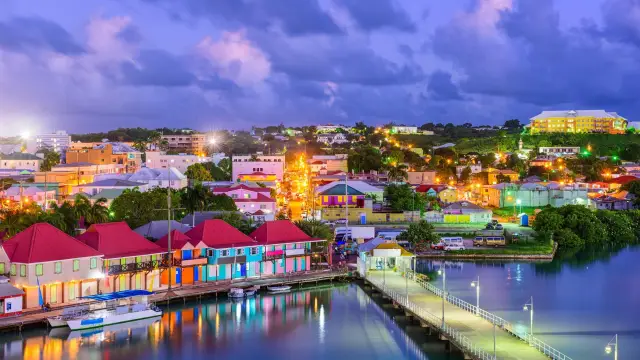
4. Antigua & Barbuda: Quiet Beaches and Nomad-Friendly Vibes
Antigua is famous for its claim of having 365 beaches—one for every day of the year—and while I haven’t personally counted, I can confirm there are a lot. Winter is prime time here, with dry, sunny days and temperatures hovering around 27–29°C. The island feels more laid-back than some of the bigger resort destinations, with a mix of small hotels, villas, and guesthouses. Barbuda, its quieter sister island, offers pink-sand beaches and fewer crowds, though you’ll typically visit as a day trip or short stay due to limited accommodation.
From a connectivity standpoint, Antigua punches above its weight. The island has reasonably good 4G coverage from Digicel and Flow, especially around St. John’s, Jolly Harbour, and English Harbour. When I tested an eSIM here, I had no trouble streaming music on the beach or using Google Maps to find trailheads for short hikes. Antigua was also one of the islands that experimented early with digital nomad visas, and while the specifics of those programs evolve, the underlying push for better internet and remote-work infrastructure benefits all visitors. If you’re planning to stay a few weeks, having a reliable eSIM plan means you can work from your balcony, a café, or even a quiet beach bar without constantly hunting for Wi‑Fi passwords.
Another advantage of Antigua is its role as a regional flight hub. VC Bird International Airport (ANU) has connections to smaller islands like Dominica, St. Kitts, and Montserrat. That makes it ideal if you’re considering a mini island-hopping itinerary. With the right eSIM—ideally one that covers multiple territories—you can land in each new place with your data already live. It’s similar to how travelers base themselves in hubs like Singapore, using a Singapore eSIM as a reliable anchor while bouncing around Southeast Asia.
5. Puerto Rico: US Convenience, Caribbean Setting
If you like the idea of Caribbean beaches but don’t want to deal with currency exchanges or unfamiliar banking systems, Puerto Rico is a compelling option. As a US territory, it uses the US dollar, and US visitors don’t need a separate immigration process beyond their usual entry rules. Winter brings warm, generally dry weather—San Juan sees average highs around 28°C in January—and you can mix historic Old San Juan, rainforest hikes in El Yunque, and surf towns like Rincón into one trip. For 2026, Puerto Rico is likely to be even more popular as airlines add capacity to sun destinations.
Connectivity here is among the best in the Caribbean. US carriers like AT&T and T‑Mobile operate on the island, and 5G is available in parts of San Juan and other urban areas. If you already have a US plan that includes Puerto Rico, you might be able to use it without extra roaming fees, but it’s crucial to read the fine print. For non-US travelers, a dedicated eSIM that partners with local networks can be more cost-effective and predictable. Because infrastructure is relatively advanced, Puerto Rico stands out among the Caribbean islands digital nomad friendly, with co-working spaces, tech communities, and cafés designed with laptop users in mind.
Imagine setting up in a co-working space in Santurce for a month, using your eSIM as a backup to the office Wi‑Fi. You spend mornings on Zoom calls, then head to Condado Beach in the afternoon with your phone tethered as a hotspot for any urgent messages. The combination of US-grade connectivity and Caribbean lifestyle makes Puerto Rico one of the best Caribbean islands for remote work, especially if you need reliable 4G/5G speeds and straightforward logistics.
Caribbean Islands for Digital Nomads and Longer Stays
Not everyone is flying to the Caribbean just for a one-week break. Increasingly, people are looking to escape winter for a month or two, keeping up with work while enjoying a more relaxed pace. When you’re staying longer, your priorities shift a bit: you start caring more about upload speeds, co-working spaces, and how easy it is to get a local SIM or a good eSIM plan. This is where the idea of the best Caribbean islands for winter sun with reliable mobile data really comes into focus, because a flaky connection that’s tolerable for a week becomes a deal-breaker over six weeks.
Islands like Barbados, Puerto Rico, and the Dominican Republic tend to top the list for longer stays. They combine decent infrastructure, multiple mobile operators, and a growing ecosystem of co-working spaces and nomad-friendly cafés. Barbados and Antigua have experimented with long-stay visas, while Puerto Rico and the Dominican Republic offer more standard tourist stays that many remote workers still use. Reliable 4G coverage means your eSIM can serve as both a primary connection and a backup when fixed-line internet goes down. In my experience, having two independent connections—a home Wi‑Fi and an eSIM data plan—dramatically reduces the odds that you’ll have to cancel a client call because someone’s digging up a cable down the street.
There’s also a financial angle. Traditional roaming for a month can be painfully expensive, especially if your carrier doesn’t treat the Caribbean as part of your usual zone. That’s why many long-stay travelers look for Caribbean roaming alternatives like regional eSIM bundles. These plans often give you a fixed data allowance—say, 20–30 GB over 30 days—at a predictable price, which makes budgeting easier. It’s similar to choosing a regional plan when you’re spending December exploring European Christmas markets and using a Germany-focused eSIM guide to keep costs under control across borders.
One counterintuitive tip: sometimes the “less famous” islands are actually better for focused work. Places like St. Kitts, Grenada, or Dominica may not have the same party scene as Cancun or Punta Cana, but that can be an advantage if you’re trying to maintain a routine. You’ll still find 4G coverage in main towns, and with a solid eSIM plan, you can create your own little productivity bubble. Consider a scenario where you work East Coast hours from Grenada: you start at 8 a.m., finish by 4 p.m., and still have time for a sunset swim. Your phone stays connected through your eSIM, your laptop tethers when needed, and you’re not constantly tempted by late-night clubbing that wrecks your mornings.
Mobile Data, eSIM Usage, and Avoiding Bill Shock
Even with the right island picked, how you manage your mobile data can make a big difference to both your experience and your bank balance. The first rule is to avoid turning on standard roaming without knowing exactly what it costs. I’ve seen carriers charge $10–$15 per day for “roam like home” packages in certain countries, and significantly more per megabyte in places outside those zones. Over a two-week Caribbean trip, that can easily run into hundreds of dollars. By contrast, many dedicated eSIM plans for the region offer, for example, 10 GB for 14 days at a fraction of that total cost.
To get the most from an eSIM, start by checking that your phone is compatible and unlocked. Most modern iPhones from the XS onward, and many high-end Androids from brands like Samsung and Google, support eSIM. If you’re unsure, EasyAlo’s general compatibility resources—similar to those used for destinations like the Italy eSIM product page—can give you a clear yes or no. Once you’ve confirmed compatibility, you can choose a plan based on your itinerary: single-island if you’re staying put, or regional if you’re hopping around.
When you install your eSIM, it’s usually best to do it at home, connected to Wi‑Fi, so you can scan the QR code and complete setup without pressure. You then leave the line switched off until you land in the Caribbean. The plan’s validity typically starts only when it connects to a supported local network, so you’re not wasting days. On arrival, you turn off data roaming on your physical SIM, activate the eSIM line, and your phone should latch onto the partner network within a minute or two. If it doesn’t, toggling airplane mode off and on or manually selecting the carrier in your settings usually fixes it.
To avoid blowing through your allowance, take a few simple steps. Set app updates to Wi‑Fi only, disable automatic cloud backups while on mobile data, and restrict background data for heavy apps like Instagram, TikTok, or cloud photo sync. Download offline maps for each island before you leave home, but keep live data on to handle rerouting and traffic. If you’re planning a lot of streaming, consider a higher-capacity plan or use hotel Wi‑Fi for heavy downloads when it’s available. Experienced travelers know that a bit of upfront planning—checking plan sizes, toggling a few settings—can turn “barely enough data” into “more than enough” for the exact same number of gigabytes.
Practical Travel Tips: Money, Language, Safety, and Local Culture
Beyond connectivity, a smooth Caribbean trip comes down to a few practical details that are easy to overlook in the excitement of booking. Currency is one of them. Some islands use their own dollars (like the Barbadian dollar or Eastern Caribbean dollar), others use the US dollar (like Puerto Rico and the US Virgin Islands), and some accept both. ATMs are common in major towns and airports, but they can be scarce in smaller villages or on outlying islands. It’s wise to carry a mix of cash and cards, and to let your bank know you’re traveling to avoid overzealous fraud blocks. With a working eSIM, you can also use mobile banking apps and digital wallets more confidently, checking transactions in real time rather than waiting for hotel Wi‑Fi.
Language varies too. English is widely spoken in islands like Barbados, Jamaica, Antigua, and the Bahamas, while Spanish dominates in the Dominican Republic and Puerto Rico, and French in Martinique and Guadeloupe. Even where English is common, you’ll often hear local creoles or dialects. Learning a few basic phrases—especially in Spanish or French-speaking territories—goes a long way. I’ve found that being able to say “Buenos días” or “Merci, ça suffit” can soften interactions when you’re asking for help, directions, or a favor like charging your phone behind a bar. If you’re unsure about pronunciation, having a translation app on your phone, backed by your eSIM data, can save you from awkward miming.
Safety in the Caribbean is generally good in tourist areas, but petty crime like pickpocketing or opportunistic theft does happen, especially around crowded beaches and nightlife zones. The usual common-sense rules apply: don’t flash expensive jewelry, keep your phone secure, and avoid walking alone in poorly lit areas late at night. One underrated safety benefit of having reliable mobile data is being able to order trusted taxis, share your live location with friends, or quickly look up the reputation of a bar or neighborhood. It’s not about being paranoid; it’s about having options if something feels off.
Culturally, each island has its own rhythm and expectations. In some places, like Jamaica or Trinidad, music and nightlife are central, while in others, like St. Kitts or Dominica, the vibe is more nature-focused and low-key. Respecting local customs—like dress codes in churches or conservative behavior in rural communities—goes a long way. Carnival and other festivals can be incredible experiences but also bring crowds, higher prices, and booked-out accommodation. If you’re planning a winter 2026 trip around a major event, book early and double-check dates. With your eSIM, you can keep tabs on official festival pages, last-minute schedule changes, and local news without relying on slow hotel connections.
Best Time to Visit the Caribbean for Winter Sun (and Good Connectivity)
For most travelers, the sweet spot for Caribbean winter sun is from mid-December through March. This is when the weather is typically driest, with lower humidity and fewer storms. Average daytime highs sit comfortably in the high 20s Celsius across many islands, and sea temperatures stay warm enough for long swims. The trade-off is that this is also peak season, so flights and accommodation are more expensive, and popular beaches can feel busier. If you’re planning for early 2026, booking flights 4–6 months in advance usually gives you a better mix of price and choice, especially from major hubs.
Shoulder months like late November and April can be excellent too, especially if you’re flexible. Prices often dip slightly, and while there’s a bit more risk of rain, you’ll still get plenty of sunny days. For remote workers or digital nomads who can stay longer, these months offer a chance to enjoy good weather without peak-season crowds. Connectivity doesn’t fluctuate much by month, but network congestion can increase during major holidays or festivals when more people are on the island. In those periods, having an eSIM that can switch between multiple local networks can give you an edge if one provider slows down.
It’s also worth thinking about how the timing of your trip intersects with your work or personal commitments. For example, if you’re based in Europe and planning to work remotely from the Caribbean, a January or February stay might align better with quieter business cycles, while still giving you long, bright days. You can structure your day around the sun: start work early, take a long midday break for the beach, then finish a few tasks in the late afternoon. With a stable eSIM connection, you’re not tethered to one spot, which makes it easier to adapt to local weather patterns—if a brief shower rolls in, you can duck into a café and keep working without missing a beat.
Finally, keep an eye on airline schedules and regional events as 2026 approaches. New routes get added, seasonal flights shift, and islands sometimes host one-off festivals or sporting events that can change demand. Using your eSIM to monitor price alerts, check airline apps, and adjust plans on the fly can turn what used to be a static, once-booked-never-changed trip into something more flexible. The more you treat connectivity as a tool rather than an afterthought, the easier it becomes to shape your winter escape around both sunshine and sanity.
Conclusion: Choosing Your Island and Your eSIM for Winter 2026
Planning a Caribbean escape for winter 2026 isn’t just about picking the prettiest beach on Instagram. It’s about finding that sweet spot where sunshine, logistics, and connectivity all line up. Barbados, the Dominican Republic, Jamaica, Antigua, and Puerto Rico each offer their own version of the perfect winter break, from all-inclusive ease to digital-nomad-friendly co-working scenes. What ties them together, especially if you care about staying online, is that they’re among the best Caribbean islands for winter sun with reliable mobile data. They have multiple mobile operators, growing 4G and 5G coverage, and a tourism industry that increasingly assumes visitors will want to work, stream, and share without friction.
On the connectivity side, the biggest shift in recent years has been the move away from expensive, unpredictable roaming towards smarter options like regional eSIMs. Instead of juggling paper SIM cards or dreading your phone bill, you can choose a plan that matches your itinerary, install it before you leave, and land with data ready to go. It’s the same mindset you’d use when planning other tech-heavy trips—whether you’re comparing flexible eSIM options for a Turkey adventure or looking at Asia-focused plans for Korea or Taiwan. The underlying principle is simple: the less you have to think about your connection, the more you can focus on your trip.
If you take one thing away from this guide, let it be this: treat connectivity as part of your core planning, not an afterthought. Decide which islands fit your style and budget, check that your phone supports eSIM, choose a plan that covers your data needs, and set it up before you fly. That way, when you step off the plane into warm Caribbean air, you’re not hunting for Wi‑Fi or arguing with a roaming message—you’re calling your driver, checking the tide for an afternoon swim, and sending a quick “made it!” photo to friends back home. Winter 2026 will be here faster than you think; with the right island and the right eSIM, you’ll be more than ready for it.